



The effects of potassium and magnesium supplementations on urinary risk factors of renal stone patients
Authors: Jaipakdee S1, Prasongwatana V, Premgamone A, Reungjui S, Tosukhowong P, Tungsanga K, Suwantrai S, Noppawinyoowong C, Maskasame S, Sriboonlue P – Journal of the Medical Association of Thailand, 2004 Mar;87(3):255-263.
The effects of potassium and magnesium supplementation on urinary risk factors for renal stone disease were studied in 61 renal stone patients. The subjects were divided into four groups and supplemented for a period of one month with:
- potassium chloride (KCl, Group 1)
- potassium sodium citrate (K Na citrate, Group 2)
- magnesium glycine (Mg glycine, Group 3)
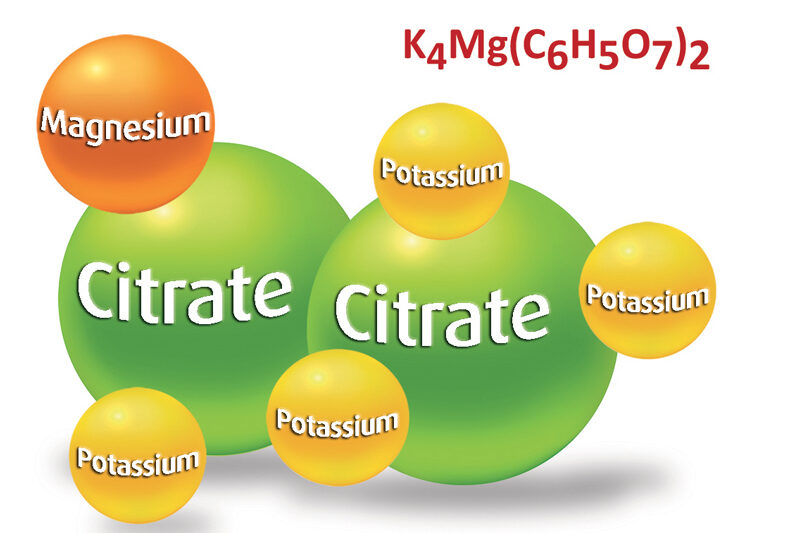
- potassium magnesium citrate (K Mg citrate, Group 4)
In groups 1 and 3, an enrichment in urine of potassium and magnesium, respectively, was found, but a decrease in urinary pH, without any change in urinary citrate or calcium.
In groups 2 and 4, a significant increase in urinary pH, citrate and potassium was observed.
Supplementation with potassium and magnesium citrate in group 4 appeared to have given the best results in terms of reducing stone risk factors, as it caused an increase in urinary pH, potassium and citrate and a decrease in calcium excretion.
Additionally, potassium and magnesium citrate also caused the urine to be enriched with magnesium, another inhibitor of calcium-containing stones.
The present results demonstrate that for those subjects at risk of stone disease and at high risk of potassium and magnesium depletion, to obtain the best therapeutic results, potassium and magnesium supplements should be provided together and also in forms that would lead to the administration of an alkaline loading effect.