



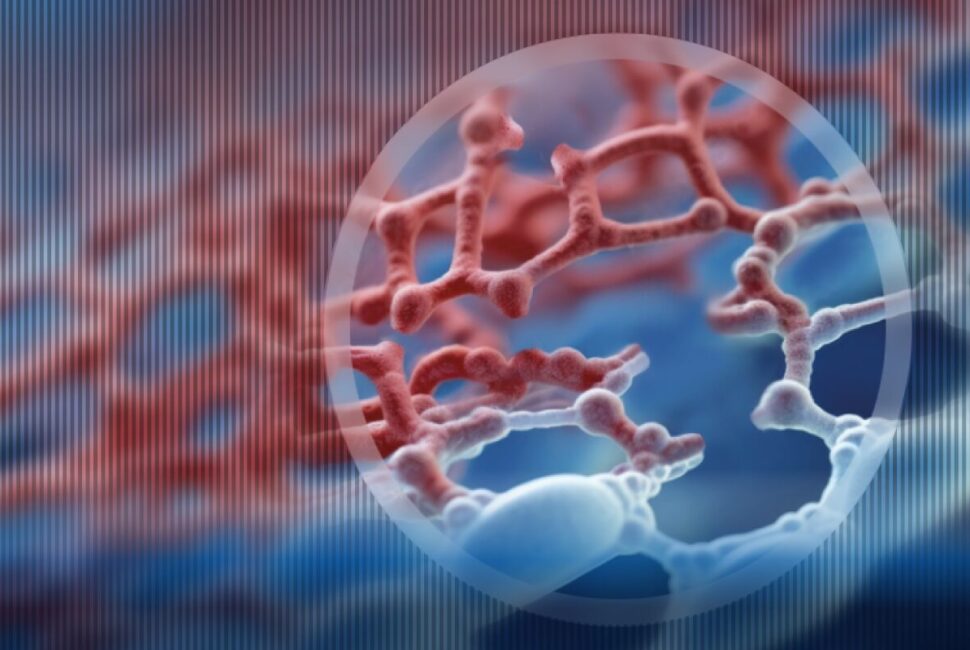
Inflammation is a fundamental physiological process, but when it tends to persist, it can negatively affect daily well-being. In this context, proteolytic enzymes represent an interesting support, thanks to their ability to act on proteins involved in inflammatory dynamics. For this reason, they are often used in formulations aimed at controlling inflammation and maintaining tissue functionality.
Indice
What is inflammation
Inflammation is a natural response of the body, a true defense mechanism that is activated when tissues experience damage or aggression, for example due to trauma, infections, or stress.
During the inflammatory process, the body releases a series of mediators and biological substances with the aim of protecting the affected area and promoting repair.
However, when inflammation becomes too intense or prolonged over time, numerous substances are produced and released, including inflammatory proteins that contribute to the appearance of the classic signs of inflammation:
- swelling
- heat
- redness
- pain
- functional limitation
Some substances, such as proteolytic enzymes, can help modulate inflammation by acting on specific proteins involved in the inflammatory cascade.
What are proteolytic enzymes?
Proteolytic enzymes are enzymes specialized in breaking down proteins. They are capable of cleaving protein bonds, transforming proteins into smaller fragments (peptides and amino acids).
Some of these enzymes can act on specific proteins involved in inflammation, thereby helping the body maintain a more controlled and physiological response to inflammatory processes.
The anti-edema effect of proteolytic enzymes
One of the most studied effects of proteolytic enzymes is their ability to reduce edema, that is, tissue swelling caused by fluid accumulation.
During an inflammatory process, the permeability of blood vessels increases. This allows proteins and fluids to leak into surrounding tissues, causing the characteristic swelling.
Proteolytic enzymes act on this mechanism in several ways. By acting on plasma proteins that promote fluid retention, they help reduce vascular permeability. The result is a decrease in swelling and an improvement in local circulation.
The fibrin network: what it is and why it can become a problem
Fibrin is a protein that plays a fundamental role in blood clotting. When tissue damage occurs, the body produces fibrin to form a three-dimensional network that “seals” the damaged area.
This network is essential in the acute phase of inflammation. However, if it persists too long, it can hinder local circulation, reduce lymphatic drainage, and promote the formation of adhesions.
Fibrin adhesions are deposits of fibrin that form between tissues. They can cause stiffness, pain, and limit joint mobility or the functionality of the affected organs.
Proteolytic enzymes and fibrin degradation
Some proteolytic enzymes are able to act directly on the fibrin network, breaking it down into smaller fragments that the body can eliminate more easily.
This process is called fibrinolysis. It normally occurs thanks to enzymes produced directly by the body (endogenous enzymes), such as plasmin, but it can be supported by the intake of proteolytic enzymes introduced from outside (exogenous enzymes).
By acting on excess fibrin, these enzymes help maintain tissue fluidity. They promote lymphatic drainage, improve microcirculation, and reduce the risk of chronic adhesions.
Fibrin and chronic inflammation: a cycle to break
When inflammation persists, the fibrin network tends to accumulate progressively. This accumulation creates an environment that hinders the resolution of inflammation itself, triggering a cycle that is difficult to interrupt.
Proteolytic enzymes, thanks to their fibrinolytic action, can help break this mechanism. By removing excess fibrin deposits, they promote the restoration of a more physiological tissue environment.
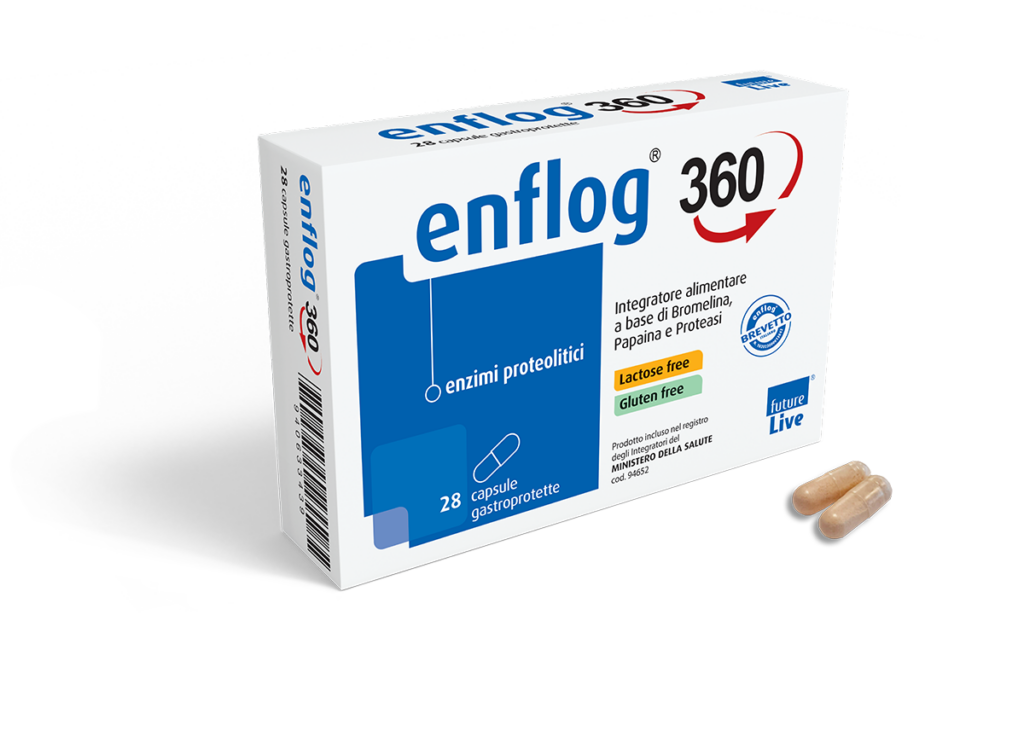
enflog® 360
Food supplement based on the enflog® enzymatic complex consisting of proteolytic enzymes.