



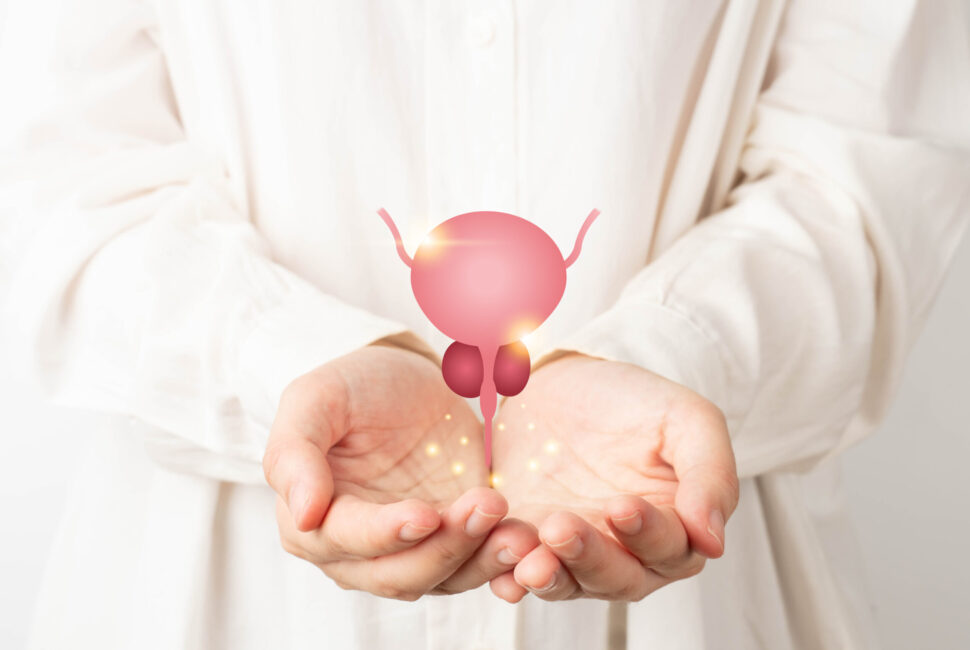
Prostatitis is an inflammation of the prostate, the walnut-shaped gland located below the bladder that contributes to the production of seminal fluid. It is one of the most common urological conditions in adult men and can present in different forms, with symptoms that vary significantly from case to case.
Contrary to common belief, prostatitis does not affect only older men: it can occur at any age, although it is more common between 25 and 50 years. It is estimated that about 10–15% of men experience this condition during their lifetime.
Indice
Types of prostatitis
The NIH (National Institutes of Health) classification distinguishes four main categories of prostatitis:
- Acute bacterial prostatitis (Category I) – sudden onset caused by a bacterial infection
- Chronic bacterial prostatitis (Category II) – recurrent or persistent bacterial infection
- Chronic pelvic pain syndrome (Category III) – the most common form (90% of cases), non-bacterial
- Asymptomatic inflammatory prostatitis (Category IV) – no symptoms, discovered incidentally
Symptoms of prostatitis
Symptoms vary depending on the clinical form, but the most common include:
Urinary symptoms
- Difficulty or pain during urination
- Increased urinary urgency and frequency
- Weak or interrupted urinary stream
- Feeling of incomplete bladder emptying
Pain symptoms
- Pain or discomfort in the perineum (area between the scrotum and anus)
- Lower back, pelvic, or genital pain
- Burning or pain during ejaculation
Systemic symptoms (acute form)
- Fever and chills
- Nausea and general malaise
- Severe fatigue
Causes and risk factors
The causes of prostatitis depend on the clinical form. In bacterial forms, the main agents are Gram-negative bacteria such as Escherichia coli (over 70% of cases), Klebsiella spp., and Pseudomonas spp., which can reach the prostate through the urinary tract or via the bloodstream. Chlamydia is the main sexually transmitted pathogen.
Risk factors include a history of urinary tract infections, bladder catheterization, prostate surgery, cystoscopy, unprotected sexual activity, and anatomical abnormalities of the urinary tract.
In non-bacterial forms, the mechanisms are less clear and may involve pelvic floor dysfunction, neural alterations, psychological stress, or autoimmune inflammatory responses.
Diagnosis: how prostatitis is identified
Diagnosis is based on a combination of medical history, physical examination (including digital rectal examination), and laboratory tests. The most commonly used tests include:
- Urine culture and urinalysis
- Prostatic secretion examination (EPS) after prostate massage
- PSA (prostate-specific antigen) – may be elevated during an acute episode
- Transrectal prostate ultrasound
- Uroflowmetry to assess urinary function
Treatments for prostatitis
Treatment depends on the clinical form.
Bacterial prostatitis is treated with antibiotics for extended cycles of 3–6 weeks and anti-inflammatory drugs.
Non-bacterial prostatitis or chronic pelvic pain syndrome requires a multifactorial approach, which may include:
- Anti-inflammatory drugs
- Alpha-blockers to reduce urinary symptoms
- Pelvic floor physiotherapy
- Relaxation techniques and stress management
- Phytotherapy based on rye pollen
Conclusions
Prostatitis is a treatable condition that requires an accurate diagnosis to identify the clinical form and establish the most appropriate therapy. In case of suspicious symptoms, it is essential to promptly consult a urologist for a specialist evaluation.