



Indice
Candida
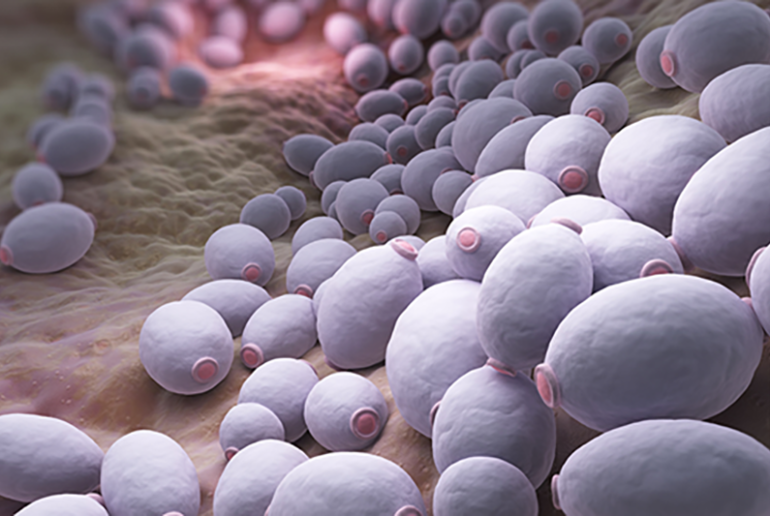
Candida albicans is a yeast belonging to the Saccharomycetes class: it is normally present in the oral cavity, intestines, and vagina as a saprophyte without any bothersome clinical manifestations
Candida can become pathogenic—meaning capable of causing disease—under specific conditions such as:
- stress
- pregnancy
- antibiotic abuse
In these cases, particularly at the vaginal level, Candida albicans transforms into its pathogenic form (hyphal form) and adheres to the vaginal epithelium, producing enzymes responsible for the inflammatory process.

Candida albicans vaginitis: recurrences
Candida albicans vaginitis is the most common type, accounting for approximately 50% of all infectious vaginitis cases.
It presents with typical symptoms:
- abundant, odorless, curd-like white discharge
- intense itching
- significant inflammation of the external genitalia
Candida albicans vaginitis is very widespread among the female population: about 75% of women suffer from it at least once in their lifetime.
Furthermore, recurrences after the first episode are very common. It is particularly significant that 4-8% of women suffer from recurrent Candida albicans vaginitis, with at least 4 episodes per year.
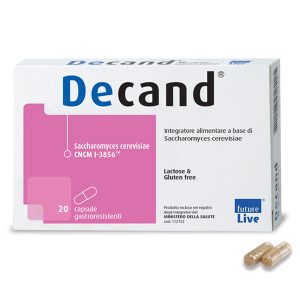
Decand capsules
Dietary supplement based on Saccharomyces cerevisiae CNCM I-3856, which helps restore the balance of vaginal flora and prevent the recurrence of candidiasis relapses.
Candida albicans vaginitis: therapy
Therapeutic protocols involve the use of specific topical antifungals (suppositories or cream) for 7–14 days or the use of systemic antifungals for 1–3 days.
Therapy is more complex for recurrent Candida albicans vaginitis with at least 4 episodes per year. In these cases, a maintenance therapy is recommended, which involves combining the standard treatment with oral antifungals for at least 6 months.
Saccharomyces cerevisiae CNCM I-3856 and recurrent vaginitis
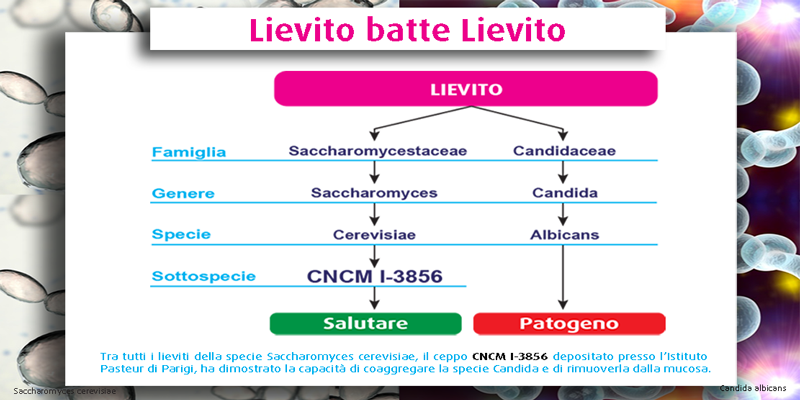
Saccharomyces cerevisiae is a healthy yeast normally used in the food industry for its ability to ferment sugars.
Saccharomyces cerevisiae CNCM I-3856 is a specific strain purposely selected and studied, both microbiologically and clinically, to restore the balance of the vaginal flora.
This particular yeast strain was the subject of a clinical study that demonstrated probiotic activity that antagonizes Candida albicans and accelerates the restoration of normal vaginal flora, improving its functionality and physiological state. Consequently, the possibility of new external aggressions by other potentially harmful yeasts, such as Candida albicans, is considerably limited.
These studies highlight that the intake of Saccharomyces cerevisiae CNCM I-3856 makes pharmacological antifungal treatment more effective and prevents the recurrence of relapses while simultaneously limiting vaginal inflammation.
Saccharomyces cerevisiae CNCM I-3856 and pregnancy
Candida vaginitis is particularly frequent during pregnancy, affecting approximately 1 in 3 women.
Saccharomyces cerevisiae CNCM I-3856 has no contraindications and can be safely used during pregnancy.