



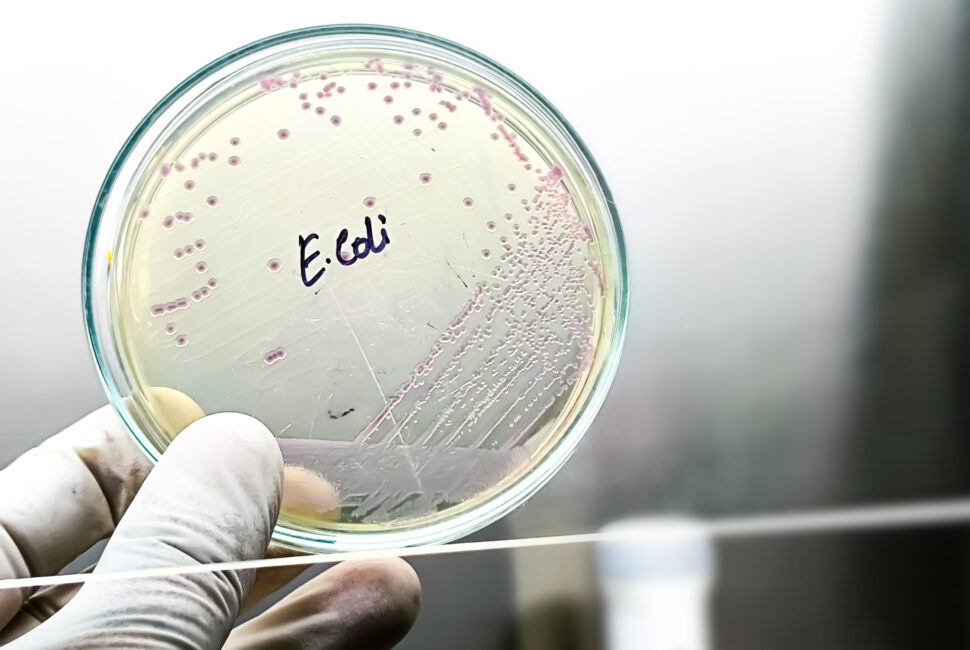
Cystitis and prostatitis that recur, urinary disorders that improve only temporarily, the feeling of never fully healing: these are very common and often frustrating situations, especially for people suffering from recurrent urinary tract infections.
In many cases, the problem is not the single acute infection, but the ability of some bacteria, particularly Escherichia coli, to persist in the body thanks to the formation of biofilm.
Indice
Escherichia coli and recurrent urinary tract infections
Escherichia coli is the bacterium most frequently involved in urinary tract infections. It is responsible for the majority of cystitis cases and represents the main etiological agent in recurrent forms.
In addition to classic cystitis, E. coli can also be involved in other disorders of the urinary and genital systems, such as:
- urinary tract infections that recur multiple times throughout the year
- bacterial prostatitis
- persistent or poorly resolved urinary disorders
In these conditions, the bacterium’s ability to adapt to the environment and defend itself against treatments plays a key role.
The role of biofilm in E. coli infections
When Escherichia coli forms a biofilm, the bacteria do not remain isolated; instead, they organize into a community embedded in a protective matrix. This structure adheres to the urinary mucosa or tissues and makes the microorganism much more difficult to eliminate.
The biofilm can, for example:
- hinder the action of antibiotics
- reduce the effectiveness of the immune response
- allow a portion of the bacteria to survive even after the end of therapy
For this reason, the infection may seem resolved, while in reality, a portion of the bacteria remains hidden, ready to reactivate over time
Biofilm and persistence of infection
The presence of biofilm completely changes the behavior of the infection. It is no longer an isolated acute event, but a condition that tends to recur cyclically.
Symptoms may subside, but the bacterial reservoir protected by the biofilm continues to represent a latent problem, explaining why many people experience:
- repeated episodes of cystitis
- only partial responses to therapies
- the feeling of never fully healing
Why it is important to consider biofilm
Recognizing the role of biofilm in Escherichia coli infections helps to understand why some cases of cystitis are so difficult to eradicate.
This approach allows for a shift toward more targeted strategies, which are not limited to attacking the bacterium in its free form but also take into account the structures that protect it and favor its persistence.