



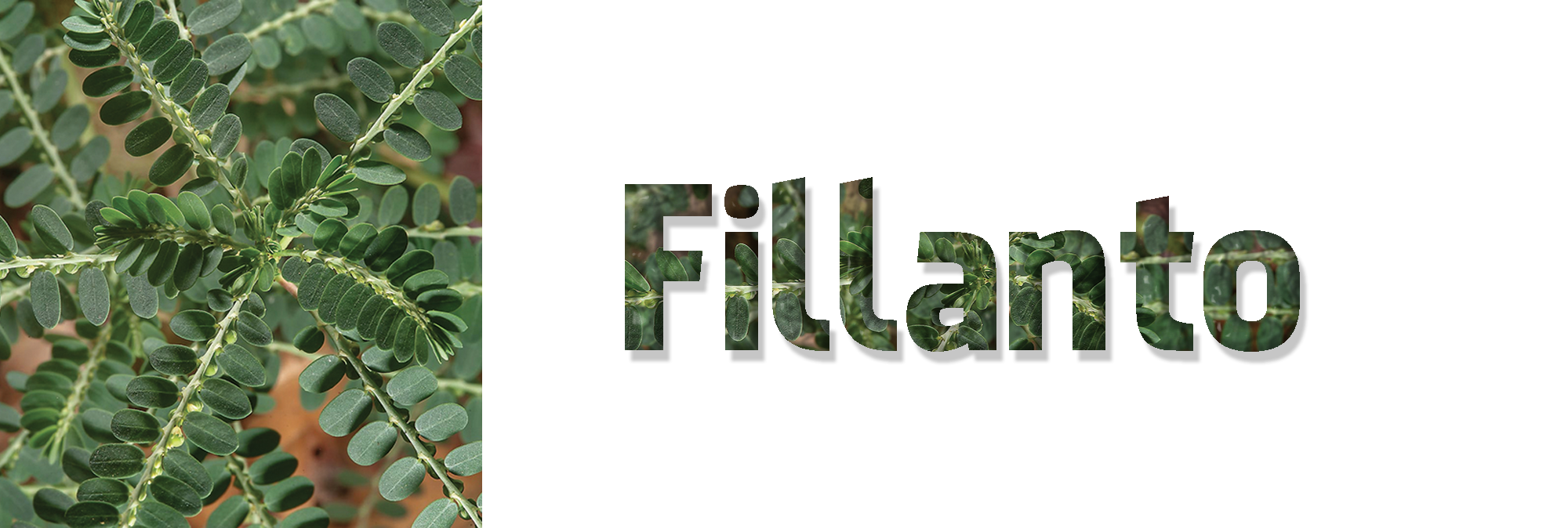
Phyllantus niruri L., also known as stonebreaker for its beneficial properties against kidney stones, is a plant native to tropical regions that is used in the traditional medicines of South America, China, and India.
The first phytochemical studies on phyllanthus date back to the mid-1800s, when the first
bioactive component, phyllanthin, was extracted. More recent studies have then revealed the presence of more than 50 compounds with pharmacological activity, including tannins, alkaloids, flavonoids, lignans, and triterpenes.
Mechanism of action of phyllanthus
An in vitro study on the effect of phyllanthus extract on calcium oxalate crystallization showed that it is able to limit the growth and aggregation of oxalate crystals, thus interrupting the formation of stones in the early stages.
In a study on rats, the intake of phyllanthus led to a modification of the shape of the kidney stones, making their surface smoother and the mass more fragile, thus facilitating their removal or dissolution.
Furthermore, phyllanthus has antispasmodic activities that lead to the relaxation of smooth muscle, mostly at the level of the urinary tract, facilitating the elimination of kidney stones.
Clinical studies on phyllanthus
A 2018 clinical study confirmed that phyllanthus contributes to the elimination of kidney stones. The patients selected for the study had kidney stones smaller than one centimeter. Analyses were performed on the patients’ blood and urine before taking phyllanthus and after 12 weeks, revealing a significant decrease in oxalate and uric acid in the urine in patients with hyperoxaluria and hyperuricosuria. Furthermore, the intake of phyllanthus proved to be safe, as it did not cause significant adverse effects.
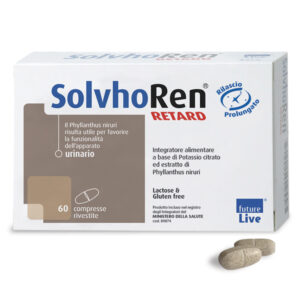
Solvhoren tablets
Useful for promoting the functionality of the urinary system. Food supplement based on Potassium citrate and Phyllanthus niruri
Bibliografy
- Barros ME et al. Effects of an aqueous extract from Phyllantus niruri on calcium oxalate crystallization in vitro. Urol Res 2003; 30: 374–379.
- Barros ME et al. Effect of extract of Phyllanthus niruri on crystal deposition in experimental urolithiasis. Urol Res 2006; 34: 351–357.
- Nathanael Y. S. Lee et al. The pharmacological potential of Phyllanthus niruri. Royal Pharmaceutical Society, Journal of Pharmacy and Pharmacology 2016; 68: 953–969.
- Nidia D. Pucci. Effect of phyllanthus niruri on metabolic parameters of patients with kidney stone: a perspective for disease prevention. Int Braz J Urol. 2018; 44: 758-64.