




Iron deficiency anemia, or sideropenic anemia, is a medical condition characterized by a reduced amount of iron in the body.
Iron plays a crucial role, as it is an essential component of several vital proteins, including hemoglobin. Hemoglobin is a globular protein found in red blood cells and is responsible for transporting oxygen from the lungs to the cells and removing carbon dioxide.
Indice
Iron in the body
According to the World Health Organization, iron deficiency anemia occurs when hemoglobin levels in the blood are below:
- 12.0 g/dL (grams per deciliter) in women
- 13.4 g/dL in men
Iron in the body is constantly bound to specific proteins that play crucial roles in its management. Ferritin functions to store iron, while transferrin and lactoferrin are involved in its transport.
Most of the iron in the body comes from the breakdown of aging red blood cells and is therefore recycled in the bone marrow to be used in the production of hemoglobin in new red blood cells.
Only a small amount of iron comes from the diet, and of this fraction, only 5–10% is absorbed by the intestine. Once absorbed, part of the iron binds to a protein, forming ferritin, which represents the main storage form of iron in the body.
Symptoms of iron deficiency anemia
The symptoms of iron deficiency anemia, or sideropenic anemia, are varied and include both disorders common to all forms of anemia and symptoms specific to iron deficiency.
Iron, being an essential component not only of hemoglobin but also of numerous enzymes that accelerate chemical reactions and participate in other metabolic processes, plays a critical role in the body’s overall metabolic energy. Therefore, iron deficiency can lead to a reduction in overall energy metabolism.
The severity of symptoms related to anemia depends on various factors, including circulating iron levels in the blood, the amount of stored iron in the body, the patient’s age, the presence of other medical conditions, and how quickly the anemia develops.
In some cases, forms of anemia may only be detected through laboratory tests, as they do not cause evident symptoms. However, other forms can cause significant symptoms.
Among the most common symptoms of sideropenic anemia are:
- headaches and frequent, prolonged migraines (found in 63% of cases)
- pallor of the skin and mucous membranes (45–50%)
- fatigue and weakness (asthenia), even at rest (44%)
- shortness of breath, sometimes even in the absence of physical exertion (dyspnea)
Causes
The causes of iron deficiency in the body can be divided into two main categories: pathological causes, the most frequent, related to diseases; and physiological causes, associated with normal conditions that involve increased iron consumption by the body.
Physiological causes of anemia
Physiological conditions include the menstrual cycle, pregnancy, breastfeeding, and childhood, during which the body requires a greater amount of iron.
During childhood and growth, the body uses iron to support the rapid formation of new red blood cells. If iron intake through the diet is not adequate, this can lead to the onset of anemia.
In women of childbearing age, the most common cause of iron deficiency anemia is heavy menstruation (menorrhagia), which involves significant monthly blood loss. During pregnancy, the body’s iron requirements increase considerably due to the natural expansion in the number of red blood cells and the development of the fetus and placenta.
Pathological causes
Pathological causes of iron deficiency anemia are often related to reduced iron availability in the body, due to a lack of nutrients or malabsorption diseases.
In Western countries, nutrient deficiency is rare, except in cases such as anorexia or bulimia. However, malabsorption, caused by gastrointestinal diseases such as celiac disease, gastritis, or prolonged use of antacid drugs such as proton pump inhibitors (omeprazole and similar), can be a common cause of iron deficiency.
Other diseases, such as Crohn’s disease, ulcerative colitis, heart failure, kidney failure, rheumatoid arthritis, obesity, certain forms of cancer, and related chemotherapy treatments, can also contribute to sideropenic anemia through various mechanisms.
Diagnosis of anemia and blood iron levels
The diagnosis of sideropenic anemia is mainly based on laboratory tests involving blood analysis.
These tests include the complete blood count (CBC), which allows the evaluation of several key parameters:
- Hemoglobin level: Measured in grams per deciliter (g/dL), it represents an essential part of the diagnosis. For women, hemoglobin levels should be above 12 g/dL, while for men they should be above 13.4 g/dL.
- Ferritin level: Ferritin is a protein that serves as a storage reserve of iron in the body. Its measurement is essential for assessing iron stores.
- Serum iron level (sideremia): This represents circulating iron in the blood at the serum level. Its evaluation is important for understanding iron availability in the body.
- Absolute red blood cell count (RBC): This parameter indicates the number of red blood cells in the blood. Normal values range between 4 and 5.2 million per microliter of blood for women and between 4.5 and 5.8 million per microliter for men.
A decrease in one or more of these parameters may indicate the presence of anemia. These tests provide physicians with important information to make an accurate diagnosis.
Treatment of iron deficiency anemia
The main goal of treating sideropenic anemia is to restore hemoglobin levels and iron reserves in the body. This therapeutic process is based on two fundamental pillars:
- Removal of underlying causes: The first and most crucial phase of treatment consists of identifying and eliminating the causes responsible for iron deficiency. It is essential to refer the patient to the most appropriate specialist to manage the disease or condition that led to the deficiency.
- Iron supplementation: To restore iron reserves, the most effective therapy involves taking oral iron supplements. This route of administration is considered safe and effective. Treatment should continue until iron storage levels return to normal values. This process may take from 4 to 6 months. After this period, it is advisable to perform new tests, such as measuring blood ferritin levels, to evaluate the effectiveness of the treatment.
Targeted treatment aimed at correcting iron deficiency is essential to relieve symptoms and improve the patient’s overall health. However, it is of primary importance to also address the underlying cause to prevent future recurrences and ensure comprehensive management of the condition.
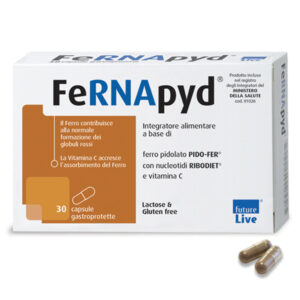
FeRNApyd
Dietary supplement based on iron pidolate (PIDO-FER®)
Contains nucleotides (RIBODIET®) and Vitamin C to ensure high iron absorption.
Side effects of iron supplementation
Among the main causes of treatment failure is poor patient adherence to the instructions and duration of therapy prescribed by the doctor.
This usually occurs due to the onset of unwanted effects (side effects) caused by iron supplementation, which may include:
- nausea
- dyspepsia, digestive difficulties
- constipation or diarrhea
- dark stools
How to reduce side effects?
To reduce these disturbances, the use of organic salts may be helpful, particularly iron pidolate, which offers better intestinal absorption and consequently a very low incidence of side effects.
Recently, iron has been combined with nucleotides, specific substances of plant origin that have been shown to improve the trophism of the intestinal mucosa, promoting faster absorption of nutrients, particularly iron itself.