




Graminex® G63® is a standardized pollen extract obtained from rye flowers (Secale cereale), known and used for years for its role in supporting prostate function and male urinary tract health.
It is a natural ingredient, selected and processed with specific technologies that allow the extraction of an active fraction rich in bioactive components, particularly useful in helping to limit the symptoms of chronic pelvic pain associated with prostatitis.
Composition
Graminex® G63® is a pollen extract that undergoes purification and microfragmentation processes to improve its bioavailability.
Pollen is a natural source of numerous nutrients and functional compounds, including:
- amino acids and peptides
- flavonoids and phenolic compounds
- phytosterols
- enzymes and antioxidant substances
This composition makes Graminex® G63® a particularly interesting ingredient for supporting uro-prostatic conditions.
Mechanism of action
Prostatitis, especially in its chronic form, is a complex condition that may involve:
- persistent inflammation
- pelvic muscle tension
- microcirculatory alterations
- local nerve sensitization
Graminex® G63® may be beneficial because it acts in a multifactorial way, supporting the prostate and helping to improve symptoms, without being an antibiotic and without directly altering the intestinal flora.
It is often indicated especially when prostatitis is non-bacterial or when, after antibiotic therapy, irritative symptoms persist.
Scientific studies on Graminex® G63®
Subjects with chronic pelvic pain syndrome were treated with Graminex® G63® for 12 weeks. At the end of the study, both pain intensity and overall symptom parameters were evaluated.
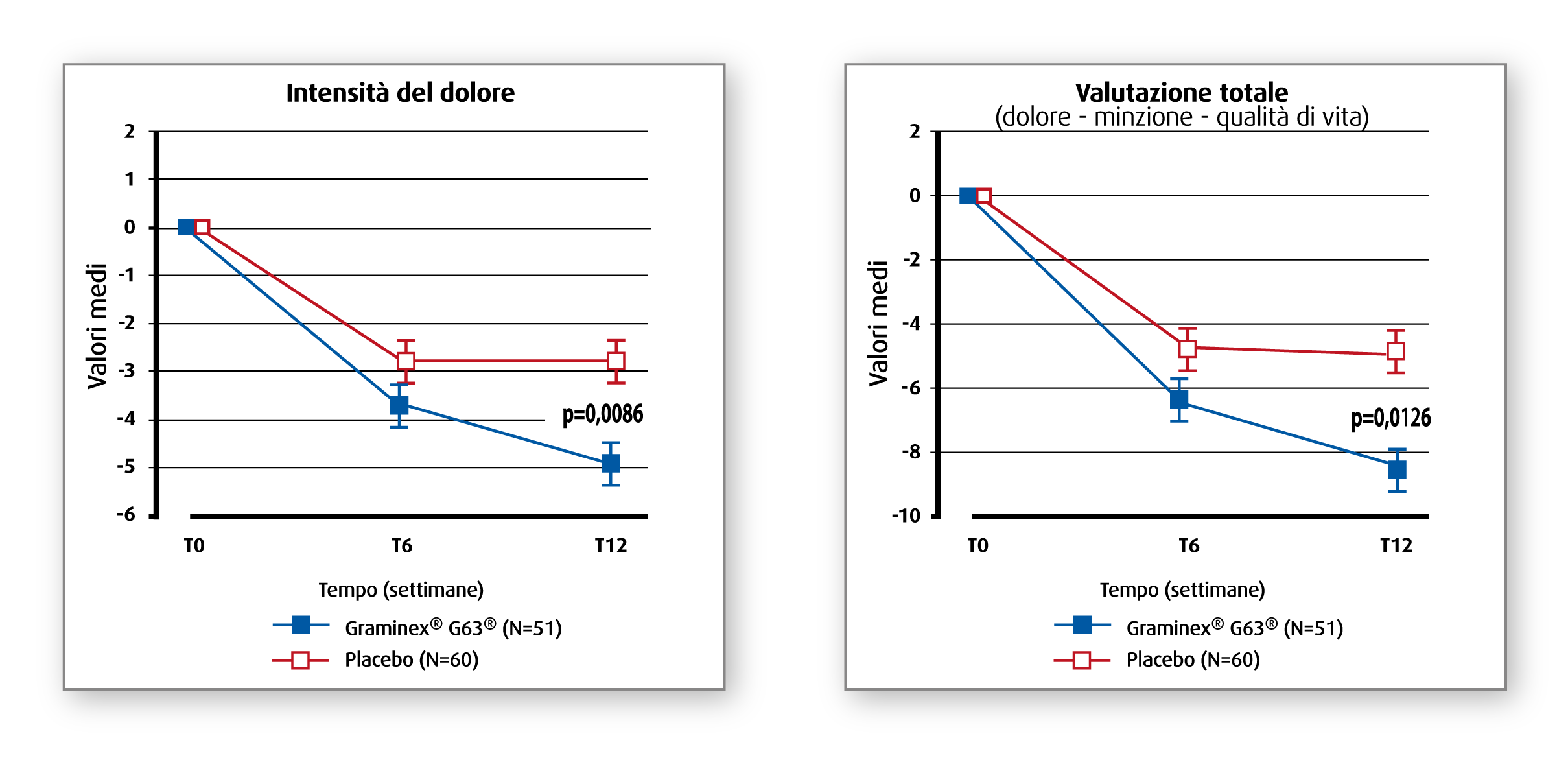
This study showed that 12-week treatment with Graminex® G63® in patients with chronic pelvic pain significantly improved symptoms compared to placebo and was well tolerated.
Bibliografy:
Wagenlehner FM, Schneider H, Ludwig M, Schnitker J, Brähler E, Weidner W. A pollen extract (Cernilton) in patients with inflammatory chronic prostatitis-chronic pelvic pain syndrome: a multicentre, randomised, prospective, double-blind, placebo-controlled phase 3 study. Eur Urol. 2009 Sep;56(3):544-51. doi: 10.1016/j.eururo.2009.05.046. Epub 2009 Jun 3. PMID: 19524353.