




enflog® is a mixture of proteolytic enzymes developed to act in synergy and with high specificity toward protein substrates of biological interest. Recently, it has proven capable of counteracting the defense mechanisms implemented by certain bacteria, particularly biofilm formation. Its use serves as an innovative support in contexts where the biofilm represents an obstacle to the effectiveness of conventional therapies for the treatment of bacterial infections.
Thanks to its patented formulation, enflog® can act in a targeted manner on the protein substrates that make up the biofilm matrix, making bacteria more vulnerable and easier to counteract.
The role of biofilm in respiratory infections
Respiratory tract infections represent one of the most common infectious issues and can affect various parts of the respiratory system, from the throat and upper airways down to the bronchi and lungs.
Among the bacteria most frequently involved in these infections are Streptococcus pyogenes, Streptococcus pneumoniae, and Haemophilus influenzae.
These microorganisms can be responsible for several infectious manifestations and, under certain conditions, are capable of developing a specific protective strategy: the formation of bacterial biofilm.
A biofilm is an organized biological matrix composed of different components, including proteins and other extracellular substances, within which bacteria can adhere to biological surfaces and find protection from adverse environmental conditions and the action of antimicrobial agents.
In the respiratory tract, biofilm can play an important role in the persistence of certain bacterial colonizations and infections, contributing to the complexity of counteracting these microorganisms.
enflog®: the enzymatic approach to bacterial biofilm
Research on enflog®, a patented mixture of proteolytic enzymes composed of bromelain, papain, and protease from Aspergillus oryzae, fits into this context.
The formulation was developed to act synergistically on protein substrates of biological interest.
Studies conducted have investigated the ability of enflog® to interfere with bacterial defense mechanisms, with a focus on biofilm formation and structure.
Interest in its application within the respiratory field stems precisely from the possibility of targeting the protein component of the biofilm matrix, aiming to leave bacteria more exposed and vulnerable to the action of conventional treatments.
Scientific evidence on the efficacy of enflog®
The activity of enflog® was experimentally evaluated against three microorganisms of particular interest in the respiratory field:
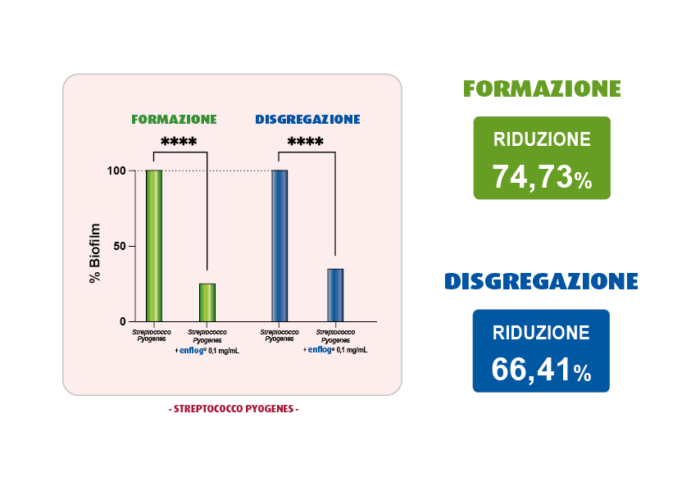
1. Streptococcus pyogenes
Bacterium primarily involved in infections of the throat and upper respiratory tract. Experimental tests demonstrated:
- −74.73% biofilm formation.
- −66.41% already established mature biofilm.
2. Streptococcus pneumoniae
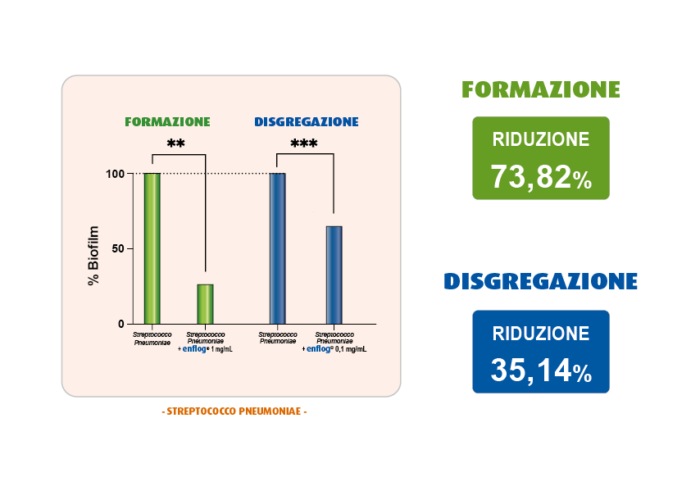
Microorganism responsible for various respiratory infections, including pneumonia and certain forms of bronchial infection.
Experimental tests demonstrated:
- −73,82% biofilm formation.
- −35,14% already established mature biofilm.
3. Haemophilus influenzae
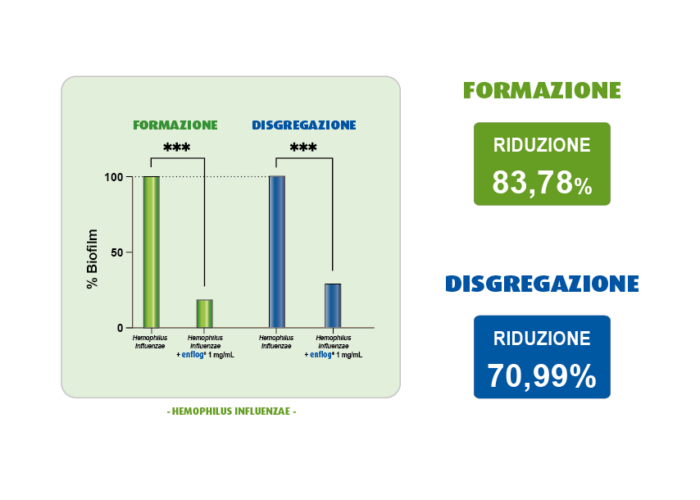
Bacterium associated with several respiratory system infections, including certain bronchial and pulmonary infections.
Experimental tests demonstrated:
- −83,78% biofilm formation.
- −70,99% already established mature biofilm.
Related topics

Biofilm ed enzimi proteolitici: un approccio mirato alle infezioni persistenti

Biofilm di Candida: perché la candidosi tende a recidivare

Biofilm di Escherichia coli: perché le infezioni urinarie tornano

Biofilm batterico: la difesa dei batteri dagli antibiotici
