




Candida vaginitis or vaginal candidiasis are very common disorders and constitute about 50% of all infectious vaginitis. They manifest with abundant, odorless, curd-like white discharge, accompanied by intense itching and significant inflammation of the external genitalia.
Indice
Vaginal candidiasis: the problem of recurrences
Their prevalence among the female population is very wide: approximately 75% of women suffer from it at least once in their lifetime, and recurrences after the first episode are very common.
In particular, 4% to 8% of women suffer from recurrent infections with at least four episodes per year, despite therapy with local antifungals (suppositories or cream) or oral medication.
Causes of recurrent vaginal candidiasis: the role of the intestine
The vaginal environment is subject to many factors that can cause an alteration of the physiological flora:
- hormonal variations
- contraception
- pregnancy
- use of antibiotics
- habits and lifestyles
All these situations can create an environment favorable to the development of opportunistic pathogenic germs coming from:
- the external environment, through contact with surfaces that are not perfectly clean or sexual activity
- the inside, specifically from the intestine
The intestine plays a role of particular importance in recurrences because it can often act as a true reservoir of opportunistic germs (bacteria and yeasts) capable of reaching the vagina due to the anatomical proximity between the anal and vaginal orifices.
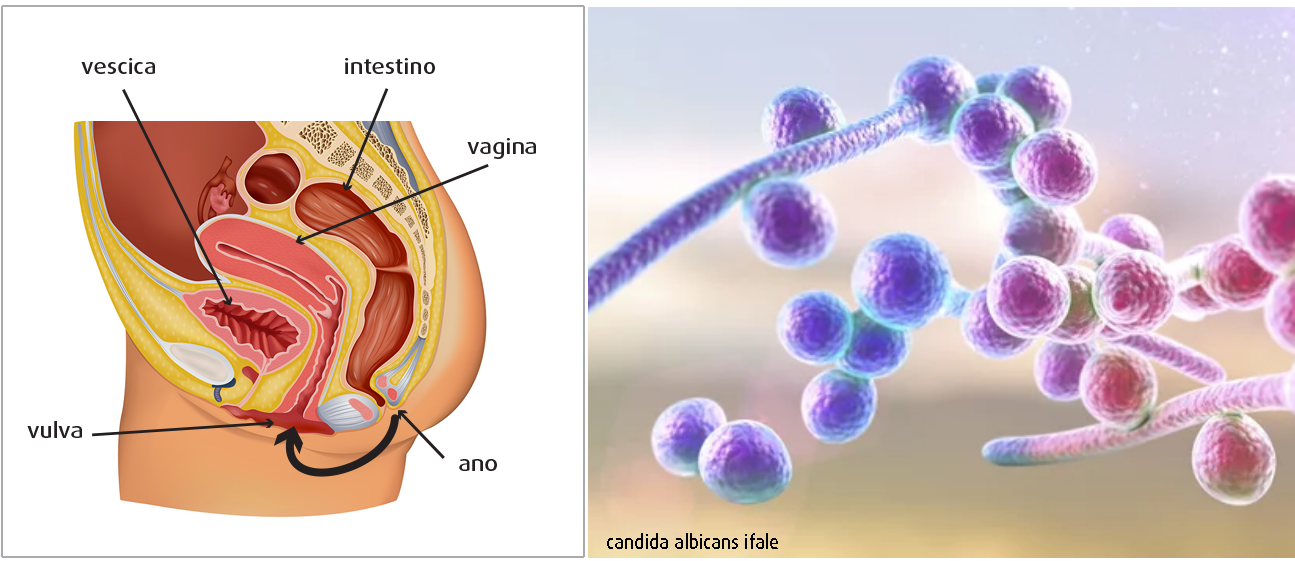
Specifically, Candida albicans is a saprophytic yeast, normally present in the intestine, capable of migrating to the vagina, adhering to the cells of the vaginal mucosa, and transforming from the non-pathogenic saprophytic form (round) to the pathogenic form (rod-shaped), triggering the production of substances responsible for the inflammatory process typical of Candida vaginitis.
The importance of probiotics in preventing recurrences
Based on these considerations, to prevent the recurrence of vaginal candidiasis, the importance of acting on two different fronts is clear:
- At the intestinal level by intervening with a probiotic action: probiotics are able to counteract the proliferation of pathogenic germs and restore the intestinal flora to normal.
- At the vaginal level with a specific action against Candida albicans aimed at limiting its adhesion and transformation into the pathogenic form.
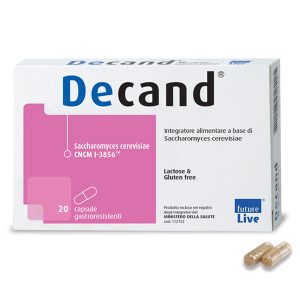
Decand capsules
Dietary supplement based on Saccharomyces cerevisiae CNCM I-3856, which helps restore the balance of vaginal flora and prevent the recurrence of candidiasis relapses.
The efficacy of Saccharomyces cerevisiae CNCM I-3856: clinical study results
«Recovery of Saccharomyces cerevisiae CNCM I-3856 in vaginal samples of healty woman after oral administration» Nutrients 24/07/2020
This specific strain of Saccharomyces cerevisiae (CNCM I-3856), a yeast specifically selected and studied for its ability to restore the balance of both intestinal and vaginal flora, was the subject of a clinical investigation. The goal was to evaluate its presence in the vagina of a group of healthy women who took a daily oral dose of 500mg for 4 weeks.
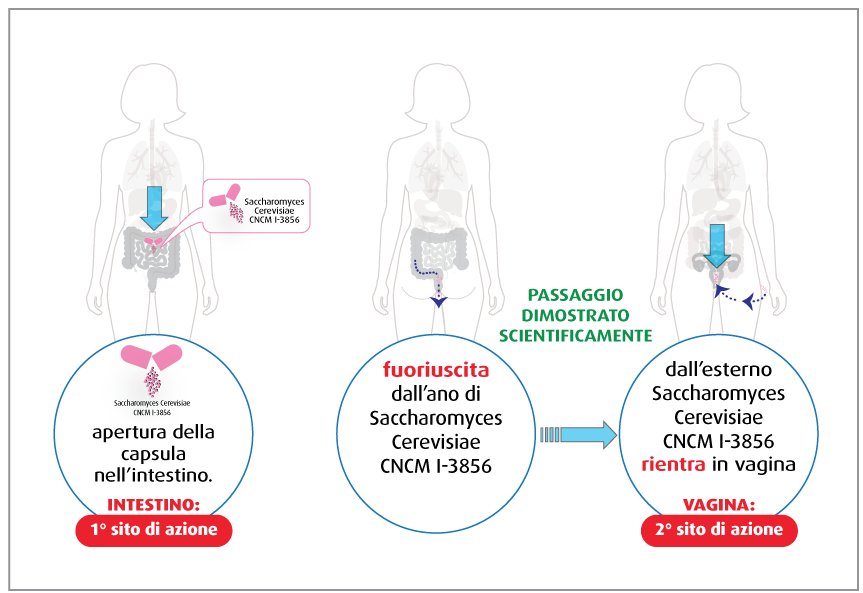
Results: After 4 weeks, Saccharomyces cerevisiae CNCM I-3856 cells were found alive and viable in 80% of fecal samples and 21% of vaginal samples from the women who had taken it orally.
These data demonstrated the ability of live Saccharomyces cerevisiae CNCM I-3856 cells to migrate from the intestine to the vagina and documented how the oral intake of this yeast allows for an early beneficial action starting at the intestinal level, which is a potential source of vaginal reinfection.
The dual action of Saccharomyces cerevisiae CNCM I-3856
Saccharomyces cerevisiae CNCM I-3856, taken at a dose of 500mg per day orally, acts on two levels:
- As an INTESTINAL PROBIOTIC against enterotoxic yeasts and bacteria.
- With a MORE SPECIFIC effect regarding vaginal Candida albicans infections, making pharmacological antifungal treatment more effective by:
-
- Preventing the recurrence of relapses
- Reducing the inflammation that causes vaginal erythema
- Preventing the recurrence of relapses
Saccharomyces cerevisiae CNCM I-3856: how to take it
In case of local antifungal therapy (suppositories/cream): an intake of 500 mg (1 capsule) per day is recommended in association with the pharmacological treatment for at least 20–40 days.
In case of systemic antifungal therapy (tablets): an intake of 500 mg (1 capsule) per day is recommended starting from the discontinuation of the pharmacological treatment for at least 20–40 days.