


Indice
La vaginite: che cos’è?
Vaginitis is the inflammation of the vaginal mucosa which, at times, extends to involve the vulva, the external part of the vagina (vulvovaginitis).
It is a very common and bothersome pathology in adulthood, for which women frequently consult a gynecologist: in fact, Vaginitis is among the primary diagnoses made by gynecologists with approximately 2.7 million cases per year (SPM 2017 data).
Candida albicans vaginitis
Recurrences
Candida albicans vaginitis is the most common type and accounts for approximately 50% of all infectious vaginitis. It presents with abundant, odorless, curd-like white discharge, intense itching, and significant inflammation of the external genitalia.
Candida albicans vaginitis is very widespread among the female population: about 75% of women suffer from it at least once in their lifetime, and recurrences after the first episode are very common. Particularly significant is the fact that 4-8% of women suffer from recurrent Candida albicans vaginitis with at least 4 episodes per year.
Therapy
Therapeutic protocols involve the use of specific topical antifungals (suppositories or cream) for 7–14 days or the use of systemic antifungals for 1–3 days.
Therapy is more complex for recurrent Candida albicans vaginitis with the presence of at least 4 episodes per year: in these cases, a maintenance therapy is recommended, to be combined with an oral antifungal treatment for at least 6 months.
Symptoms: how to distinguish types of vaginitis
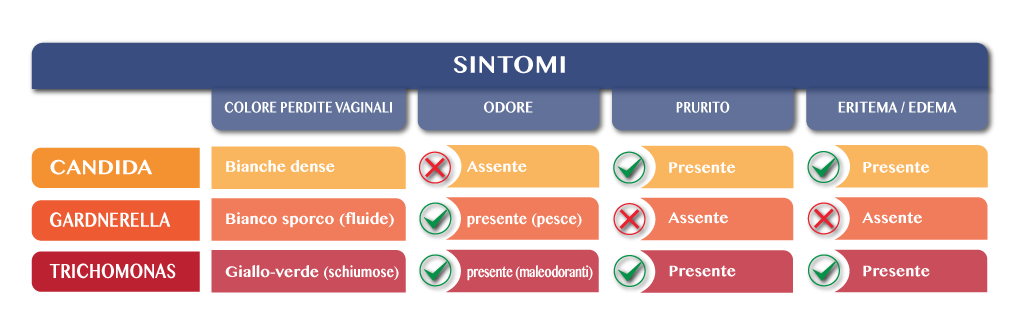
Ogni tipo di vaginite presenta dei segni e dei sintomi che consentono, con un po’ di esperienza, di identificarne la probabile origine:
- Candida Vaginitis presents typical white, thick, cottage cheese-like secretions; it is odorless; it has a strong component of itching and erythema (redness), including the external genitalia.
- Gardnerella Vaginitis presents thin grayish discharge; it manifests a typical fishy odor; scarce itching and irritation.
- Trichomonas Vaginitis presents frothy yellow-green discharge; foul-smelling; strong itching, erythema, and burning.
Risk factors
The most common factors favoring the onset of vaginitis are:
- Hormonal variations related to the menstrual cycle, pregnancy, hormonal contraception, and menopause.
- Intense sexual activity.
- Incorrect hygiene practices that can favor the passage of intestinal germs into the vagina due to the anatomical proximity between the anus and the vagina itself.
- Use of substances and materials capable of irritating the mucosa and altering vaginal pH, such as aggressive soaps, tampons, detergents, and fabric softeners.
- Clothing that is too tight or made of synthetic fabrics, which increases the temperature in the genital area.
Saccharomyces cerevisiae CNCM I-3856 and recurrent vaginitis
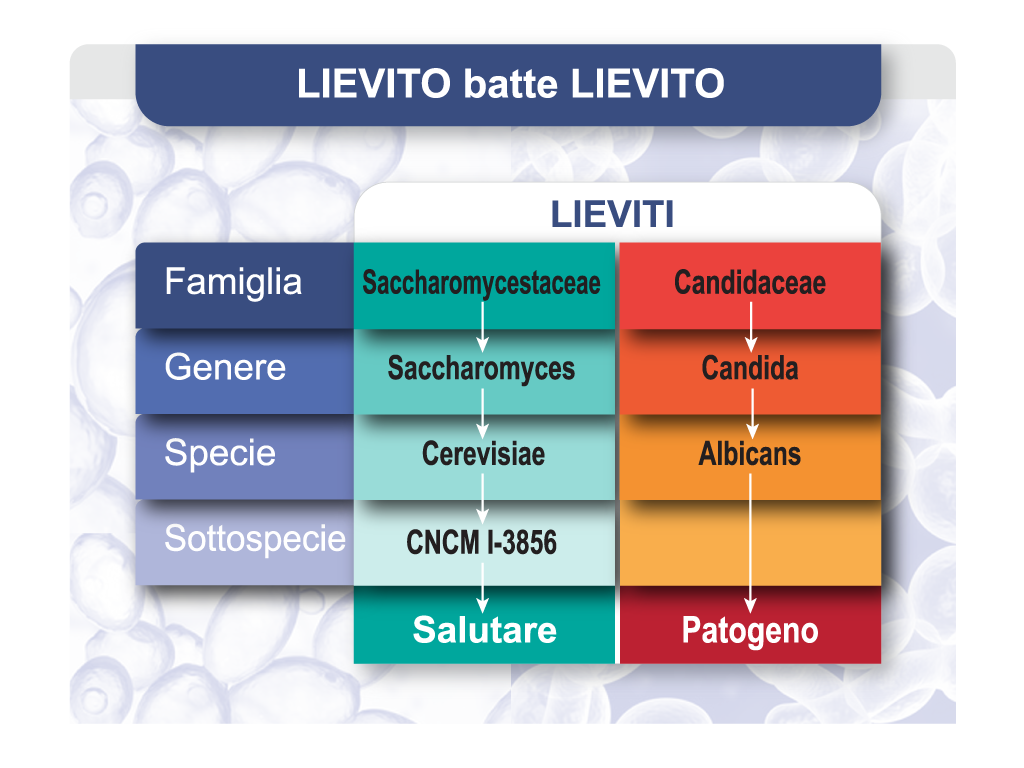
Saccharomyces cerevisiae is a healthy probiotic yeast normally used for food purposes due to its fermenting capacity.
In particular, the CNCM I-3856 strain of this yeast was specifically selected and studied, both microbiologically and clinically, for its ability to restore the balance of vaginal flora.
At a microbiological level, it has been shown to be able to limit the proliferation of Candida by antagonizing its adhesion at the vaginal level.
At a clinical level, it has demonstrated the ability to make pharmacological antifungal treatment more effective, significantly preventing the appearance of recurrences while simultaneously limiting vaginal inflammation.

Decand capsules
Dietary supplement based on Saccharomyces cerevisiae CNCM I-3856, which helps restore the balance of vaginal flora and prevent the recurrence of candidiasis relapses.
Saccharomyces cerevisiae CNCM I-3856 and pregnancy
Candida vaginitis is particularly frequent in pregnancy, where it affects 1 in 3 women.
Saccharomyces cerevisiae CNCM I-3856, as a probiotic yeast, presents no contraindications and can be safely used during pregnancy.