



Recurrent cystitis, a painful and debilitating disorder characterized by bladder inflammation, affects millions of individuals worldwide.
Although various therapeutic options exist for treating acute cystitis, preventing recurrences remains a significant challenge for patients and healthcare providers.
In this context, D-mannose emerges as a promising and innovative option for the management and prevention of cystitis recurrences.
Indice
Recurrent cystitis: a challenge for urological health
Cystitis, commonly known as a lower urinary tract infection, is an inflammation of the bladder usually caused by pathogenic bacteria such as Escherichia coli (E. coli).
Typical symptoms include:
- pain and burning during urination
- constant urge to urinate
- sensation of incomplete bladder emptying
- pain and a feeling of pressure in the lower abdomen
While acute cystitis can be treated effectively with antibiotics and symptomatic therapies, some people may experience recurring episodes of infection, known as recurrent cystitis. This condition is often characterized by the occurrence of three or more episodes of cystitis in a year, causing significant discomfort and compromising the patient’s quality of life.
The effective management of recurrent cystitis represents a clinical challenge and requires a personalized approach that takes into account individual risk factors and patient needs.
In this context, D-mannose emerges as a promising preventive strategy to reduce the frequency of recurrences and improve the quality of life for patients suffering from this condition.
What is D-mannose?
D-mannose is a natural sugar similar to glucose, present in small amounts in certain foods. This molecule has demonstrated an anti-adhesive action against certain strains of bacteria, including those responsible for urinary tract infections, such as Escherichia coli (E. coli).
Its ability to bind to pathogenic bacteria and prevent their adhesion to the bladder walls makes it an interesting candidate for the prevention of cystitis recurrences.
Mechanism of action of D-mannose in the prevention of cystitis
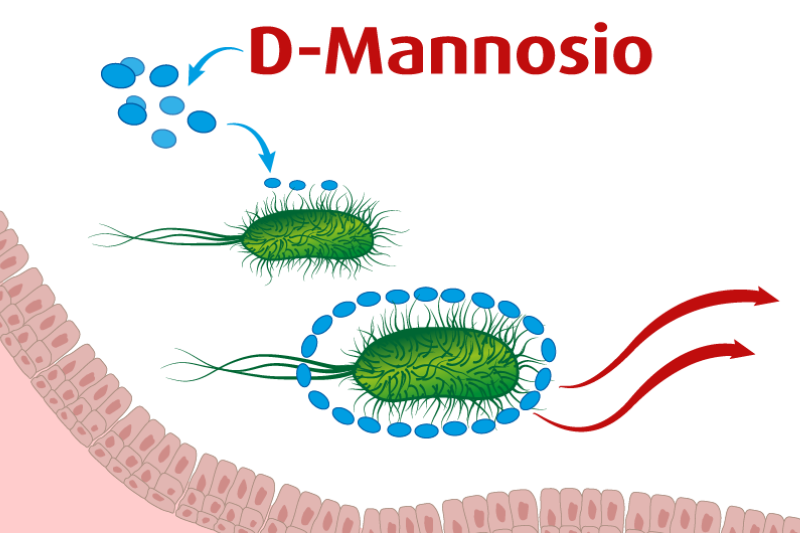
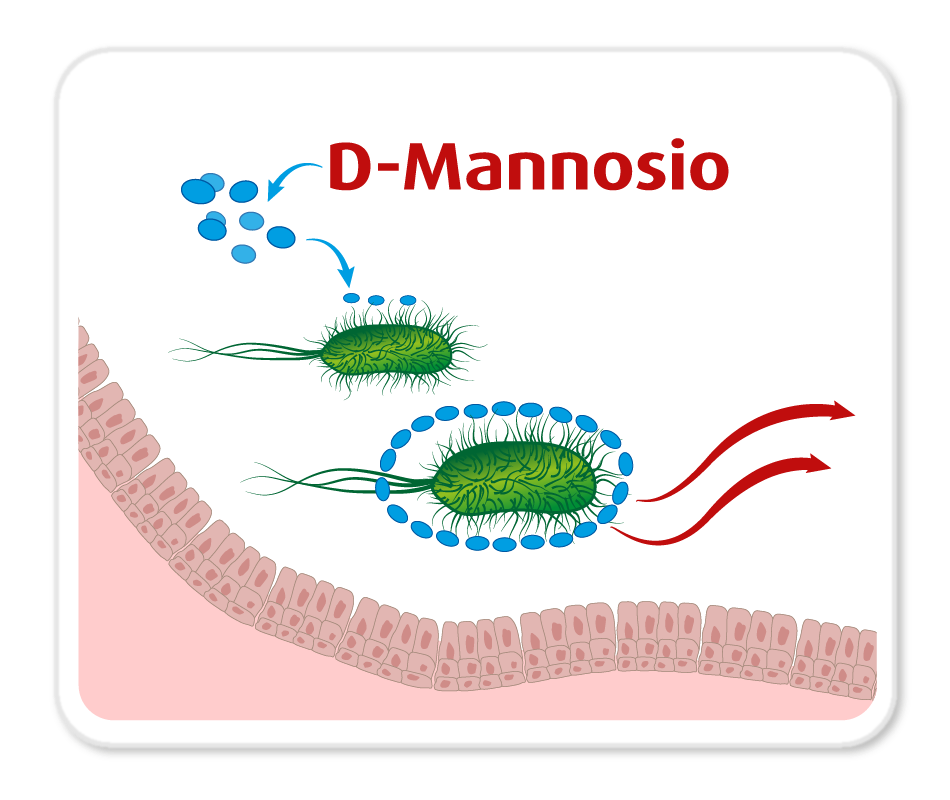
D-mannose acts as an anti-adhesive agent, helping to prevent harmful bacteria from attaching to the bladder walls. In fact, it possesses a high affinity for the fimbriae—the anchoring organs—of many bacteria, particularly E. coli, to which it binds, competitively inhibiting their adhesion to the bladder mucosa.
D-mannose is excreted through the urine, carrying the bacteria away with it, thus reducing the risk of infection and recurrence.
Efficacy of D-mannose in the prevention of cystitis recurrences
Clinical and experimental studies have explored the efficacy of D-mannose in preventing cystitis recurrences, with promising results. It has been highlighted that D-mannose can significantly reduce the frequency of cystitis recurrences compared to a placebo.