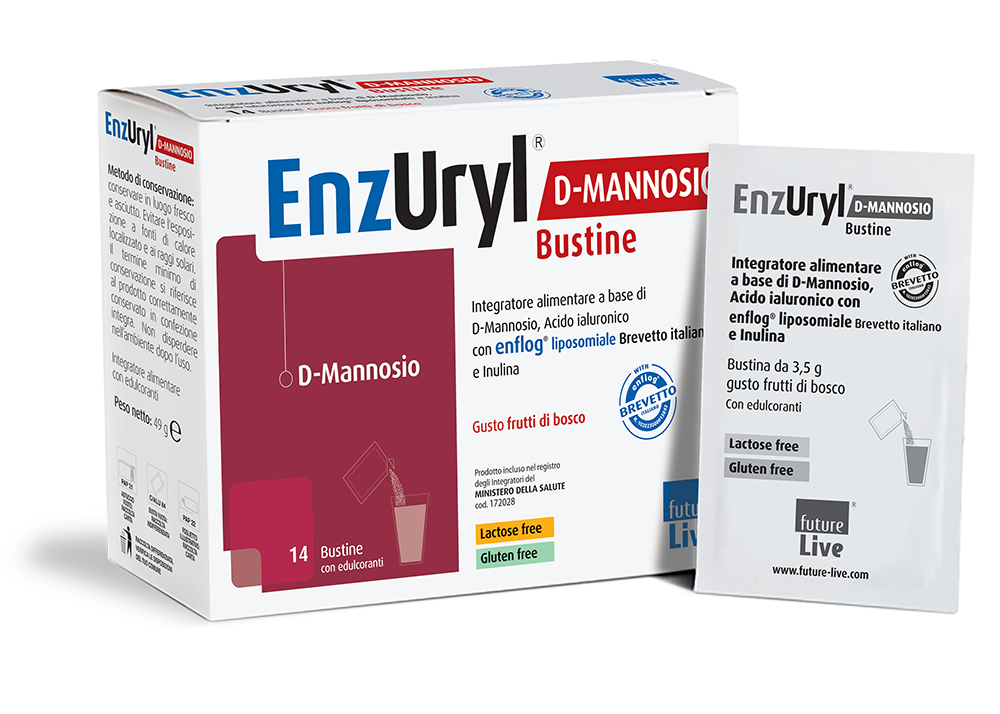

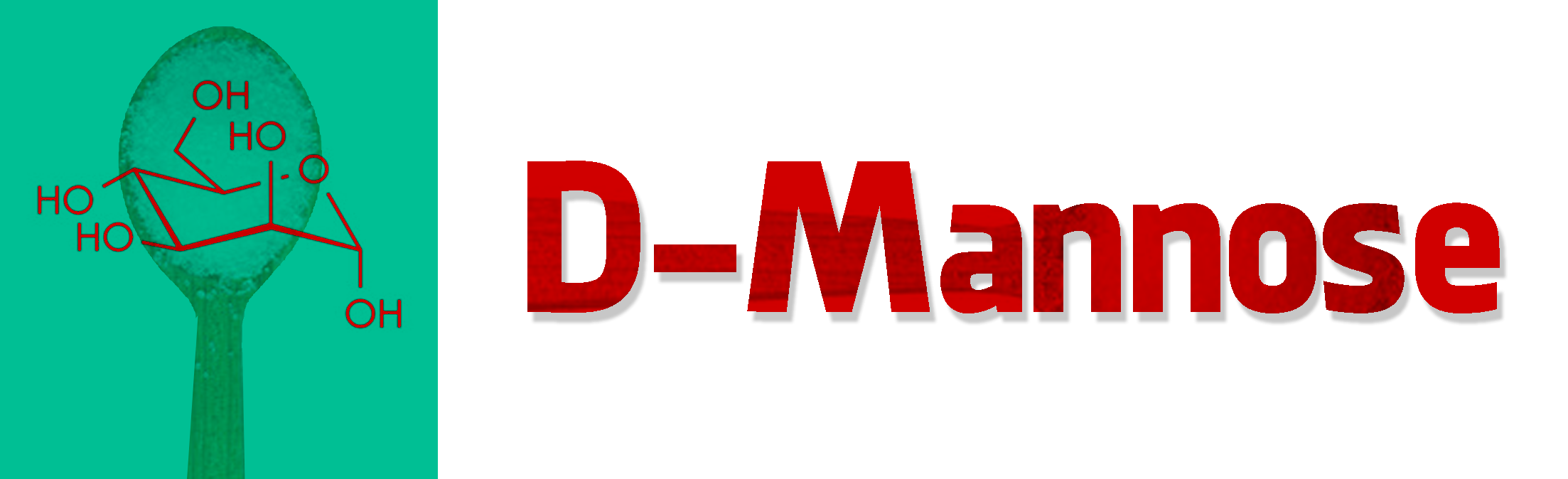
D-Mannose is a monosaccharide capable of preventing the adhesion of harmful bacteria to the bladder walls, reducing the risk of recurrent cystitis.
What is D-Mannose?
D-Mannose is a simple sugar found in small quantities in some fruits and in birch and larch wood.
Unlike glucose, which has a similar structure, D-Mannose is only partially metabolized. For this reason, it does not provide a significant amount of calories, therefore it does not cause weight gain and does not raise blood sugar levels.
How does it work?
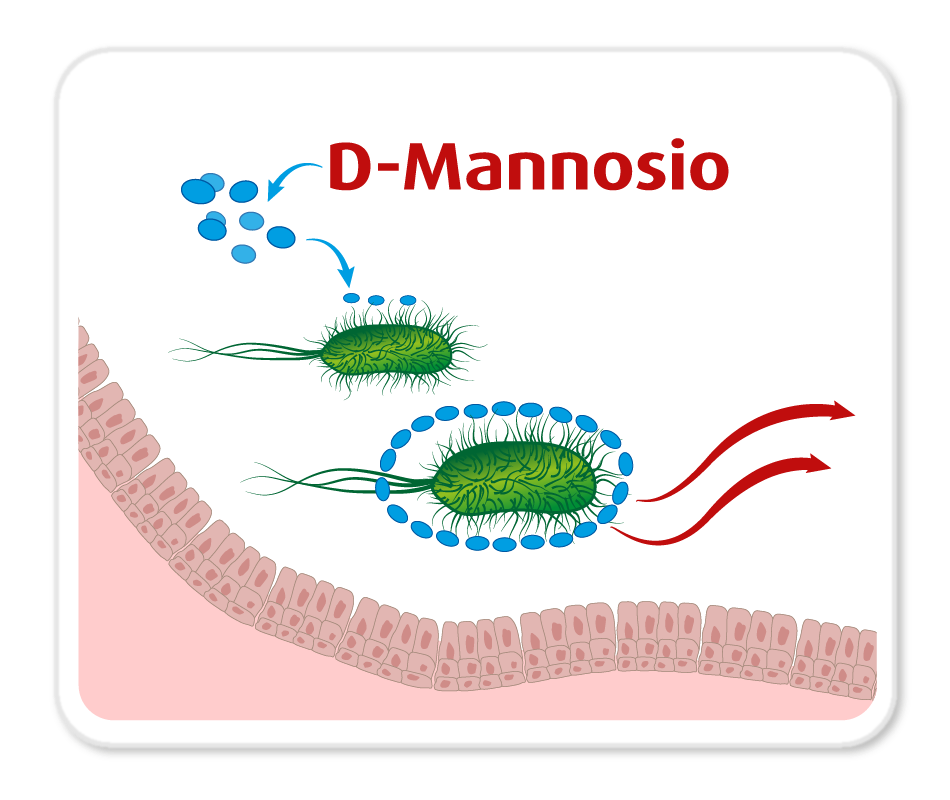
When cystitis occurs, harmful bacteria such as Escherichia coli attach themselves to the bladder walls, causing inflammation and pain.
D-Mannose acts as an anti-adhesive agent, helping to prevent harmful bacteria from attaching to the bladder walls. In fact, it possesses a high affinity for the fimbriae—the anchoring organs—of many bacteria, particularly E. coli, to which it binds, competitively inhibiting their adhesion to the bladder mucosa.
D-Mannose is excreted through the urine, carrying the bacteria away with it, thus reducing the risk of infection and recurrence.
D-Mannose: a clinical study
A randomized clinical trial—a study in which treatment assignment occurred randomly—demonstrated that D-Mannose is effective in preventing cystitis recurrences.
Following the initial antibiotic treatment of acute phase cystitis, 205 women with a history of recurrent cystitis were divided into two groups.
One group received a prophylaxis of 2g of D-Mannose per day for 6 months, while the control group received no prophylaxis.
At the end of the study, the group treated with D-Mannose experienced a recurrence rate of 14.6%, compared to the control group where cystitis recurrences occurred in 60.8% of patients.
It was therefore demonstrated that a daily dose of 2g of D-Mannose has a significantly superior effect compared to the group without prophylaxis and is effective in preventing recurrences.
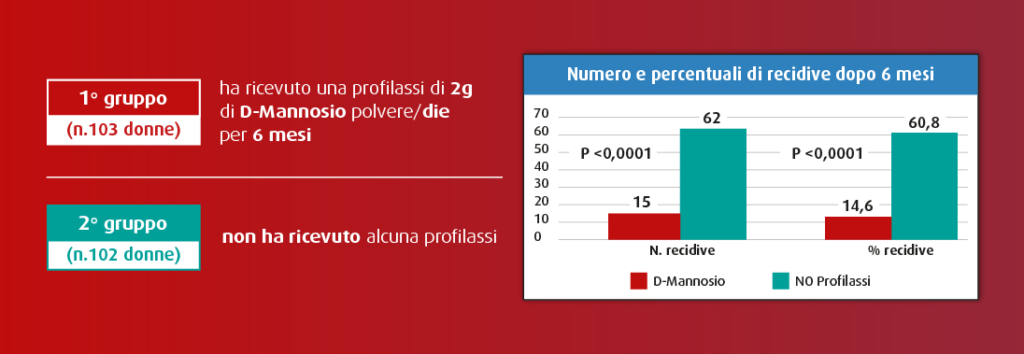
*The data reported in the table were extrapolated from the clinical study by Kranjčec et al. (2014)
For more information on the clinical study, click here:
https://www.future-live.com/d-mannosio-studio-clinico-2014/
D-Mannose: side effects
The intake of D-Mannose does not present significant side effects. At high doses, it can cause mild intestinal disturbances, which generally disappear within a few days.